


Featured Projects
|
In 2014, Flextronics (now Flex) came to Georgia Tech with an interest in integrating and testing devices in our authentic home environment (The Aware Home). They were at a stage in their development of the Wink Hub where they needed a home environment to test ranges and reliability, as well as show clients how their products would integrate into a home environment. The Wink Hub is now available as a Do It Yourself solutions for the connected home, enabling transfer of messages between in-home devices and the Wink cloud. |
Seeking mentorship and advice is a key activity in a graduate student’s career development, specifically when transitioning from academia, and looking for job opportunities. While multiple sources of career-related information are available to graduate students, there are multiple benefits in getting this information through a mentor. This project presents UI enhancements to Peoplegrove for GT-Connects, to improve the mentoring experience of mentors and mentees. Website: |
Visual analytics (VA) systems with semantic interaction help users craft machine learning (ML) based solutions in various domains such as bio-informatics, finance, sports, etc. However current semantic interaction based approaches are data and task-specific which might not generalize across different problem scenarios. In this project, we describe a novel technique of abstracting user intents and goals in the form of an interactive objective function which can guide any auto-ML based model optimizer (such as Hyperopt, Sigopt, etc.) to construct classification models catering to the expectation 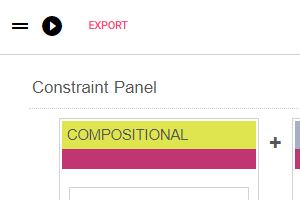 |
About GVU

RESEARCH
23 Core Areas

PEOPLE
300 Researchers

PROJECTS
250 Current

LABS
80 Partners

FUNDING
$9 Million in Grants
GVU Resource Labs

App Lab
Built for Success
A mobile computing "hackerspace."
Visit the App Lab website
Location: TSRB 333

GVU Prototyping Lab
From Concept to Creation
A rapid prototyping "makerspace."
Visit the Prototyping Lab website
Location: TSRB Basement

GVU Craft Lab
Making for All
A soft-goods "makerspace."
Visit the Craft Lab website
Location: TSRB 225B

Usability Lab
Testing Methods and Technology
An adaptable project testing space.
Visit the Usability Lab website
Location: TSRB 216
