Isbell, Stamps Fellowships Advance Minority-led Research in School of IC
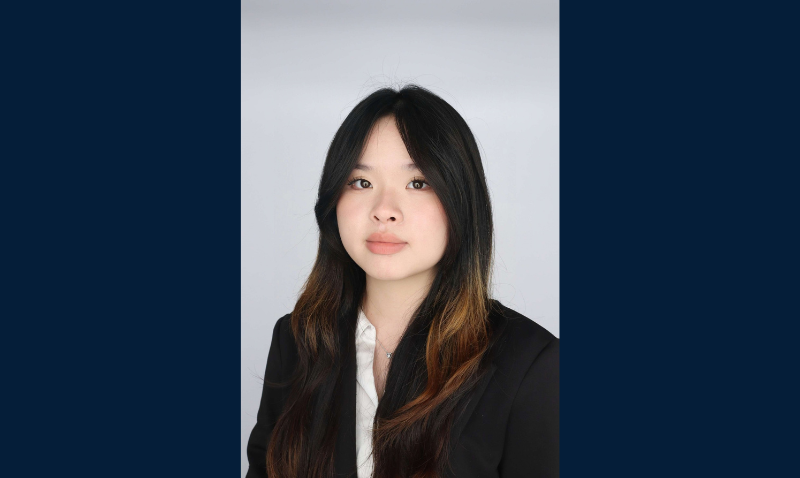
Sherilyn Francis enters her final semester of her Ph.D. at Georgia Tech with extra motivation after being named the first recipient of the Charles Isbell Jr. Graduate Fellowship.
The new fellowship award was announced in 2023 and named after Isbell, who served as dean for the Georgia Tech College of Computing from 2019 to 2023.
Isbell joined Georgia Tech as a faculty member in 2002. He was instrumental in developing the College’s innovative Threads curriculum and the Online Master of Science in Computer Science (OMSCS) program.
The new fellowship is given to graduate students from underrepresented groups.
Francis is a fifth-year Ph.D. student in human-centered computing (HCC) working toward the improvement of black women’s maternal health. She is advised by Associate Professor Andrea Parker.
“I’m humbled and grateful that my body of work was compelling enough to be awarded,” Francis said. “Receiving this fellowship in Dr. Isbell’s name is encouraging, and I want to do my best work in my last semester to honor his legacy.
“This fellowship secures funding to complete my Ph.D. and continue equity-centered work and champion voices of marginalized or under-resourced populations. This fellowship is directly making this work possible.”
Francis’s work drew attention early in her Ph.D. when she started assisting Parker in the Preventing Maternal Mortality Using Mobile Technology (PM3) study led by the Morehouse School of Medicine’s Center for Maternal Health Equity.
The project aimed toward designing an app that reduces maternal mortality among Black postpartum women by getting them care on their phones. The app featured real-time health monitoring, educational resources, social support groups, and personalized care.
Google recognized Francis’s work through its Fitbit Health Equity Research initiative in 2021.
Francis entered the HCC Ph.D. program with a background in public health. She holds a bachelor’s degree in public health education and promotion from Georgia Southern University and master’s degrees in public health and biotechnology from Morehouse.
“I felt overwhelmed at first because I thought I had made the wrong choice pursuing a computing Ph.D. coming from a public health background,” she said. “After steeping myself in the literature and applying myself, I found that I can be a leader and innovator in this space.”
Francis said the fellowship will allow her to continue her research in clinical artificial intelligence (AI) for black women’s health.
Student Enters Ph.D. Program as Stamps Fellow
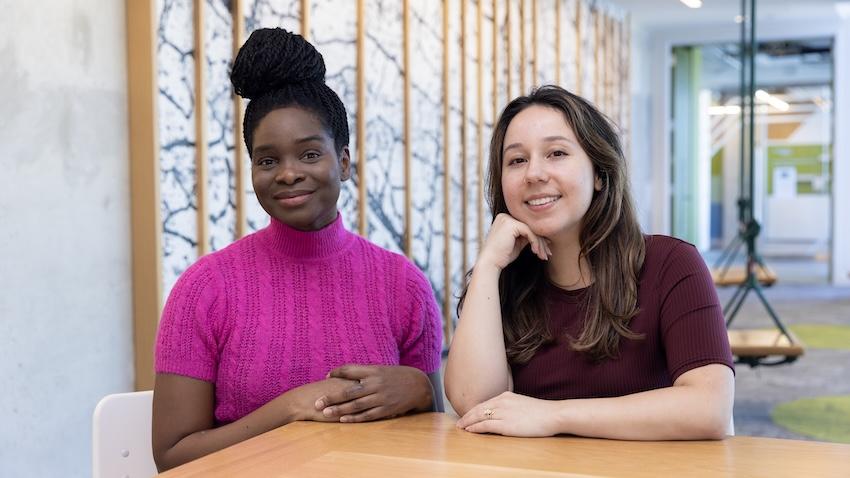
As Francis gets set for her final semester, Rachel Baker-Ramos is beginning the first semester of her Ph.D. as a recipient of the Stamps Fellowship.
Baker-Ramos is part of the second cohort of the Stamps Fellows, which was implemented by Georgia Tech in 2025. The Stamps Fellowship is the highest merit-based doctoral fellowship offered by Georgia Tech and given to exceptional scholars positioned to advance technology that improves the human condition.
She is the second student from the School of Interactive Computing to be named a Stamps Fellow. Adya Danaditya was a member of the first cohort last year.
Baker-Ramos completed her master’s in human-computer interaction in 2024 under Georgia Tech’s MSHCI program.
She spent two years as a research scientist in the Ka Moamoa Lab, led by SIC associate professor Josiah Hester. In 2025, she received the College of Computing’s Outstanding Research Scientist Award.
She will continue her Ph.D. research with Hester as her advisor.
Baker-Ramos has assisted Hester, a native Hawaiian, on several Hawaii-based projects centered on sustainability and indigenous STEM education.
As a master’s student, Baker-Ramos led the design of Kumu Connect, a STEM lesson plan generator that creates culturally relevant lessons co-designed with Hawaiian immersion language teachers.
Hester and his lab received a Google Academic Research Award for their work on Kumu Connect and recognition from the 2025 MIT Solve Indigenous Communities Fellowship. Baker-Ramos was also first author on a paper about the project that earned best paper honorable mention recognition at the ACM Interaction Design and Children Conference.
“When I first came to Tech, I was seeking out something with the Hispanic community because we are underrepresented in STEM, but it became this partnership with my advisor,” Baker-Ramos said. “It’s been interesting as a researcher from an underrepresented community working with another community that has some experiences that are parallel and some that are different.”
As she thinks about what her Ph.D. research will look like, she is interested in how AI is impacting indigenous cultures. She plans to start research in that area in Hawaii and then expand to other communities.
“We’re talking with Hawaiian educators about what AI should look like if it were grounded in principles of caring for the land,” she said. “I want to look at what’s appropriate with these tools, and what should be their limitations with data sovereignty, community agency, sustainable impacts, and how they’re localized to each community.
“Right now, my work is mostly in Hawaiian spaces, but there’s a lot of nuance between different communities. We need to understand what each community wants or doesn’t want out of these systems.”