New CS Grad Reflects on Ph.D. Journey
Last week, Georgia Tech recognized hundreds of students completing their degrees. One of these students is Mirabel Reid, who received her Ph.D. in computer science.
Reid started the CS Ph.D. program in Fall 2020 after earning her undergraduate degree in math and computer science from the University of Pittsburgh. She had previously done a summer internship at Tech as an undergrad.
“I really enjoyed both Georgia Tech’s campus and the city of Atlanta,” Reid said. “After meeting the professors in the theory department and learning more about the research that is done here, I felt very confident in my decision.”
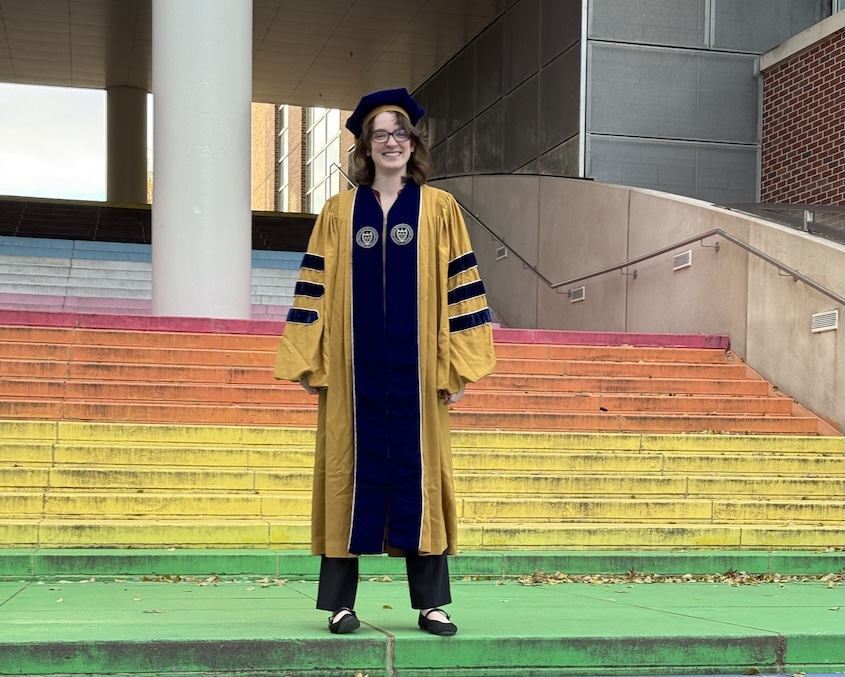
Reid’s research has focused on the intersection of theoretical computer science, neuroscience, and machine learning.
“The overarching question I study is how local interactions between neurons can lead to complex structures in the brain,” she said.
“The behavior of biological neurons is very complex; it is too complex to reasonably simulate more than a handful of them in detail.
“However, we can identify patterns in neurons’ behavior and use them to build a simplified model. My research focuses on analyzing these models mathematically.”
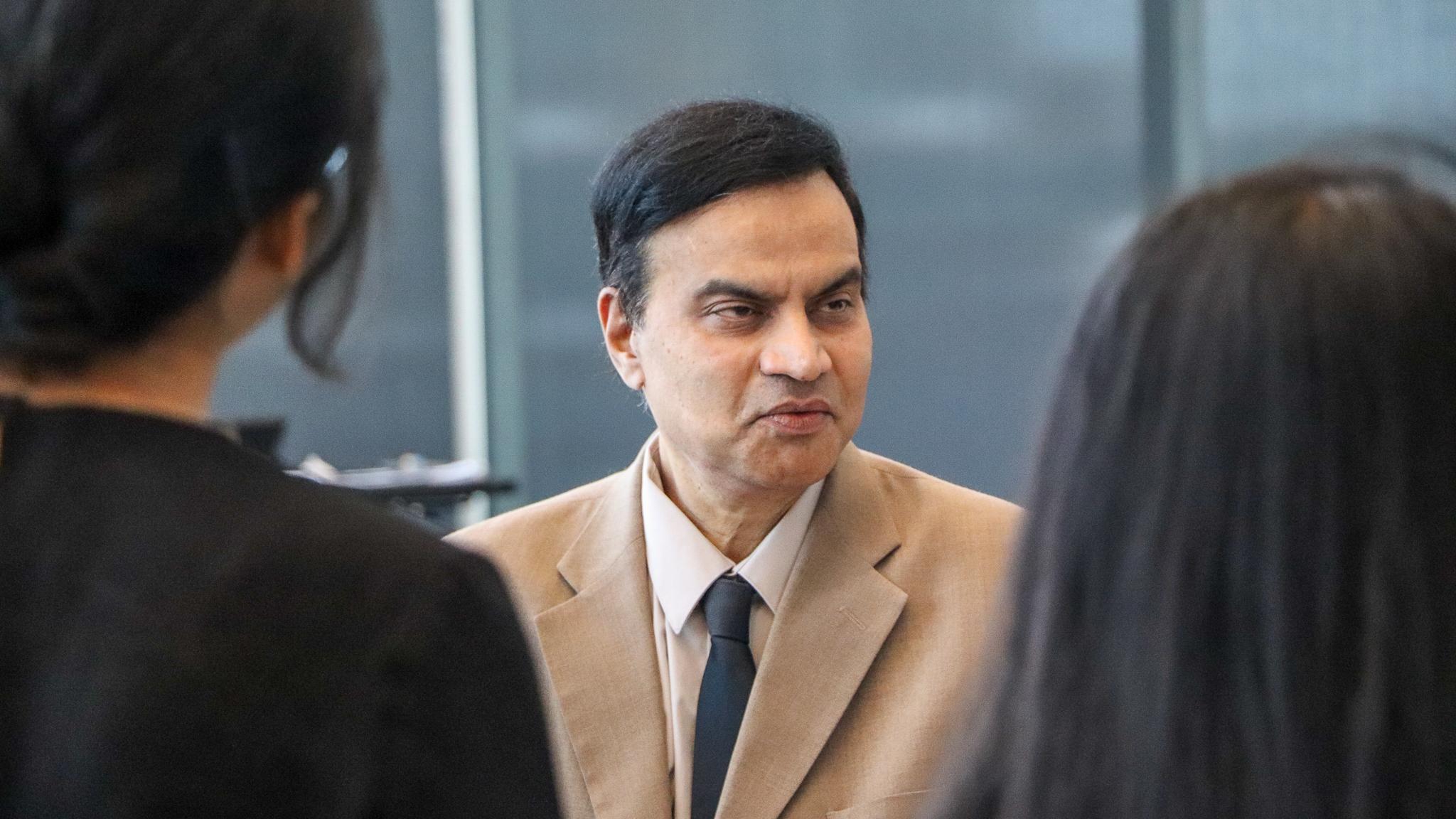
Reid said that she has always been interested in interdisciplinary research, but wasn’t intending to work in neuroscience when she started her degree. It wasn’t until she began working on a project with her adviser, School of Computer Science Professor Santosh Vempala, that she became interested in researching the topic herself.
One of the biggest lessons Reid said she has learned throughout her Ph.D. experience is that ‘soft’ skills are just as important as research and technical skills.
“When I first joined, I was intimidated by the idea of networking and trying to advertise my work. However, after focusing on developing these skills and consciously practicing at conferences and workshops, I feel much more confident with them,” she said.
Reid put these skills to use when she presented one of her papers at Computational and Systems Neuroscience (CoSyNe) and the Conference on Learning Theory (COLT). She also presented at AAAI earlier this year. Reid said she is thankful for the opportunity to present to interdisciplinary audiences.
“I’ve received comments from the perspectives of machine learning, psychology, education, and even philosophy. While publications are not the most important thing, it is always gratifying to get recognition for hard work,” Reid said.
Reid said the best aspect of her experience has been the people she’s met and friends she’s made along the way. For others considering grad school, she recommends making time for fun and prioritizing mental health.
“Even when it comes to research productivity, sometimes the best way to make progress is to step away from the computer and reset,” she said.
After completing her degree, Reid is planning on doing a postdoctoral fellowship.