Securing the Future of AI, One System at a Time
As companies race to bring artificial intelligence (AI) tools to market, concerns about security, reliability, and trust continue to grow.
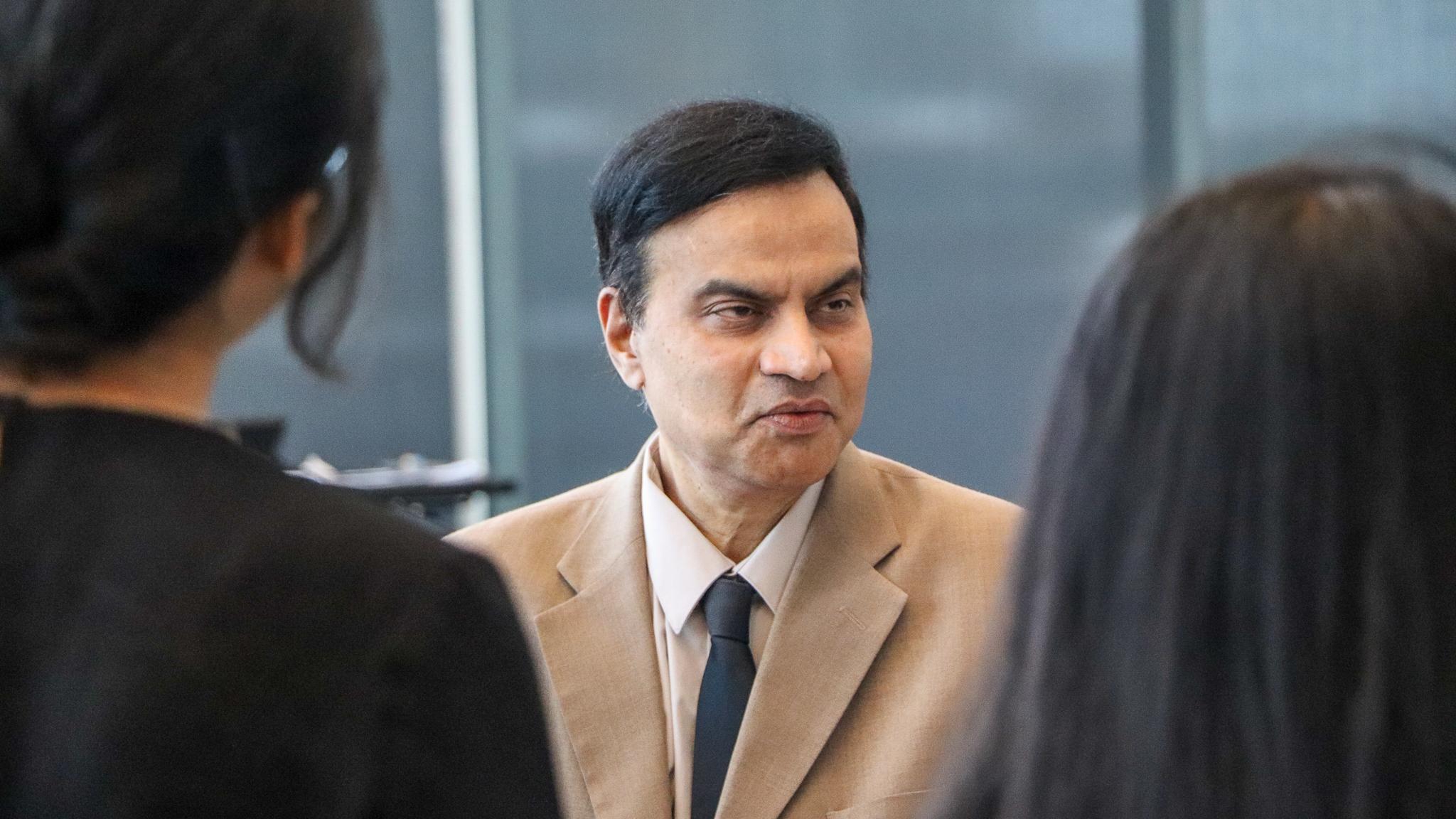
At the Georgia Institute of Technology, Professor Vijay Madisetti is working to address those challenges by developing AI systems that are not only powerful but also secure, interpretable, and practical for real-world use.
Madisetti, a Fellow of the IEEE and recipient of the Terman Medal from the American Society for Engineering Education, earned his doctorate from the University of California, Berkeley. He has spent decades advancing fields such as embedded systems, cloud computing, blockchain, and digital signal processing.
His focus has now shifted to one of the most pressing frontiers in technology: the intersection of artificial intelligence, AI agents, cybersecurity, privacy, and efficiency.
About a decade ago, Madisetti identified two emerging technological revolutions — one in blockchain and another in generative AI. He stepped away from traditional research funding cycles to develop new foundations in both areas, focusing on scalability, efficiency, and security for decentralized finance systems, as well as improvements in AI models and agents.
The Journal of Electronic Commerce ranked his blockchain-related inventions among the top 10 globally in 2020, based on the number of U.S. patents issued. Working with collaborator Arshdeep Bahga and without external funding, Madisetti developed dozens of inventions that resulted in more than 100 issued U.S. patents. He later licensed these technologies to Georgia Tech for research and development and is now focused on evaluating, publishing, and licensing them more broadly.
“Large language models and AI agents are here, but there are a lot of issues that limit their use — issues involving security, scalability, and efficiency,” he said.
His recent work reflects an effort to bring greater structure, efficiency, and trust to the field. In one project, Madisetti developed an empathetic AI agent that recognizes customer emotions and generates appropriate responses to improve customer service interactions. In another, called Sagent, he addressed the challenge of evaluating product returns by analyzing factors such as packaging conditions, return timelines, and discrepancies — tasks that typically require human judgment.
He also developed a secure protocol known as MCP-Secure, designed to enable safer deployment of AI agents that rely on the widely used model context protocol.
Beyond customer-facing systems, Madisetti is tackling challenges in enterprise environments. His framework, known as “Shakespeare SQL,” is designed to help AI systems interpret complex and ambiguous data queries while maintaining strict security and privacy controls. The goal is to make enterprise data access scalable and secure, particularly for organizations handling sensitive information.
Together, these efforts point to a broader vision: autonomous, multimodel AI systems that can interact seamlessly with users and other AI agents while maintaining strong safeguards. The work has implications across industries, including retail, health care, and financial technology.
That urgency is reflected in the pace of his research. Over the past 12 months, Madisetti has submitted approximately 100 papers to leading IEEE and ACM journals, with more than a dozen already published.
At the same time, he is focused on translating research into real-world applications. Through Georgia Tech’s Vertically Integrated Projects program, Madisetti is exploring commercialization opportunities and seeking funding to bring his AI solutions to market.
Mentorship remains central to his work. Madisetti has supervised more than 25 doctoral students and received Georgia Tech’s Outstanding Ph.D. Dissertation Advisor Award. He is also a best-selling author and co-author of several books used at universities worldwide.
Now working primarily with master’s students, he encourages them to move beyond absorbing knowledge and toward producing it. He teaches courses in the School of Cybersecurity and Privacy and the School of Electrical and Computer Engineering.
“Master’s students are consumers of knowledge; scholars are producers of knowledge,” he said. “My students are really proud of that.”
By involving students in cutting-edge research, he aims to prepare them for both academic and industry careers and equip them to contribute to a rapidly evolving field.
As AI continues to reshape how businesses and individuals interact with technology, Madisetti’s work highlights a critical reality: Innovation alone is not enough. Ensuring these systems are secure, trustworthy, and accessible may be just as important as building them.