Beyond the Code: Alumna Reflects on Resilience, Mentorship, and the Computing Alumni Network
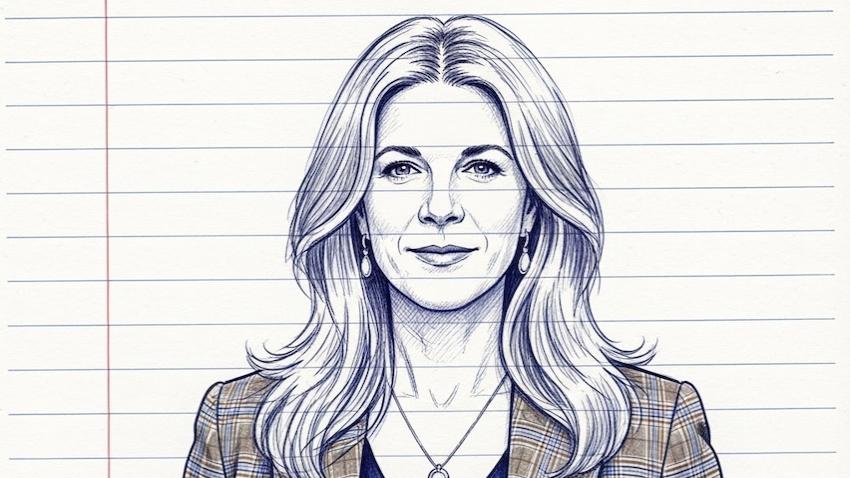
They say it’s never too late to find your people. It took a while for Angie Lane (CS 2001), but returning to her roots at the College of Computing after nearly twenty years not only helped her discover a community but also made her realize how much there is to gain from reconnecting.

Now a senior professional working at the intersection of business automation and AI integration, Lane balances a high-tech career with a people-first leadership style as the head of the College’s Computing Alumni Network. In this role, she promotes mentorship, global outreach, and the "non-linear" paths that shape a successful career.
In the following Q&A, Lane shares insights from her journey from a computer science student to an AI automation expert, discusses the "human" side of technology, and outlines her vision for growing our alumni community well beyond Atlanta.
What drew you to get involved with the Computing Alumni Network?
Honestly, it started for personal reasons. I wanted to expand my network and find my people. But what kept me engaged was something deeper. I reconnected with the College about ten years ago, and I quickly realized how much I'd missed by not being involved sooner.
There's an energy you get from staying close to a place that shaped you, and I wanted to help provide that for others the way I wished it had been for me.
Can you share a moment or initiative with the Network that you’re especially proud of?
We've had some wonderful events over the years — some that really stand out, others that were quieter but no less meaningful. Reflecting on it, what I'm most proud of is how the Network has endured the turbulence of the last few years.
Navigating the pandemic, adapting to significant changes in our supporting staff, and still showing up for students and each other — that resilience is something I don't take for granted.
How has the alumni community changed since you graduated?
I can't speak to the full arc. I got involved with the Computing Network in 2019, so my perspective is more recent. What I can say is that our focus has become more centered on the students, how we can give back, and how we can include our global alumni network.
Why do you think staying connected to the College matters, even years after graduation?
I'm living proof that it's never too late and that getting involved is more than worthwhile. The relationships you build here, the sense of shared identity with people who went through something hard and came out the other side — that doesn't expire. And the further you go in your career, the more you realize how rare it is to find a community with that kind of foundation.
You’re now working in AI automation—what excites you most about your work today?
What gets me out of bed every morning is the chance to make work more human again. There's a pattern I see everywhere right now where people are being used as the connective tissue between disconnected systems — doing repetitive, manual work that drains the meaning out of their days. It's deflating in a way that's hard to overstate. I believe automation, when done right, can give people back the time and energy. If I can add some genuine meaning back to someone's workday, that's a win I'll take every time.
How did your experience as a CS student prepare you for a career in tech and business?
Georgia Tech taught me how to adapt — and more importantly, that I could. It gave me the discipline to teach myself new things, the humility to ask for help when I needed it, and the confidence to know I can do hard things. That combination has been the through-line of my entire career. The specific technical skills matter, but it's that mindset that's carried me through every pivot and challenge since.
What advice would you give to current students who hope to follow a similar path?
Find a mentor, and don't wait until you feel like you need one. The relationships you build now — with professors, with older students, with alumni — will compound in ways you can't predict.
Also, stay curious beyond your major. The most interesting problems I've worked on sit at the intersection of technology and human behavior, and I never would have found my way there if I'd kept my head down in purely technical work or kept doing only what I already knew.
How can alumni best support students and recent graduates right now?
Mentoring is the highest-leverage thing you can do, especially for students graduating into such unpredictable times. It doesn’t have to be formal or structured mentoring. Sometimes it's just about being genuinely available, replying to an email, scheduling a coffee chat, or sharing an honest picture of what your career actually looked like, not the polished version. Students need to see that the path isn't always linear, and that people who have navigated uncertainty are willing to help them do the same.
What’s next for the Network—any upcoming priorities or initiatives you’re excited about?
Our big focus right now is growth — expanding the College of Computing alumni in Atlanta and beyond. There's a lot of Georgia Tech computing talent spread across the country and the world, and we want those people to feel that this community is for them, too, not just those of us who stayed local.
Making that geographic reach feel real, not just theoretical, is something we're actively working toward.