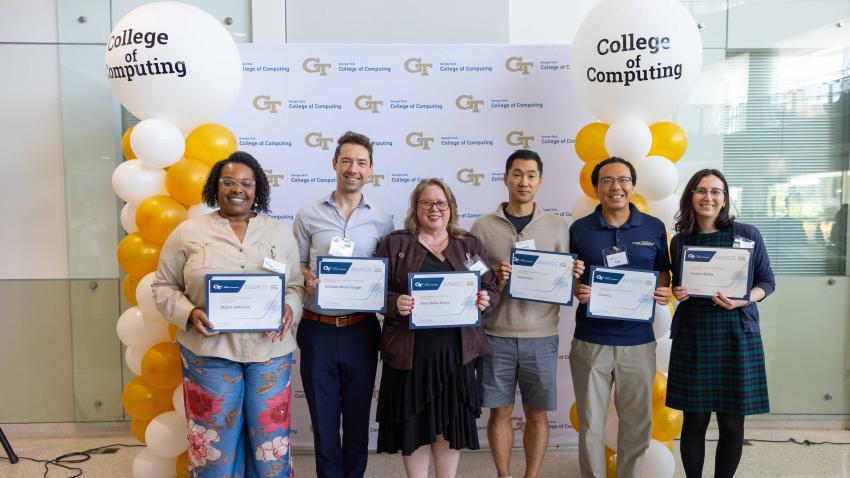
Cybersecurity School Takes Home Multiple Awards
Seven members of the School of Cybersecurity and Privacy (SCP) community were recognized for their leadership and excellence on Monday afternoon at the 35th Annual College of Computing Awards Ceremony.
“I am pleased to be able to recognize all of this hard work,” said Dean Vivek Sarkar during the ceremony.
One student, two staff members, and four faculty members were nominated by their SCP peers and received awards for their achievements over the past year.
Student Solves Real World Problems
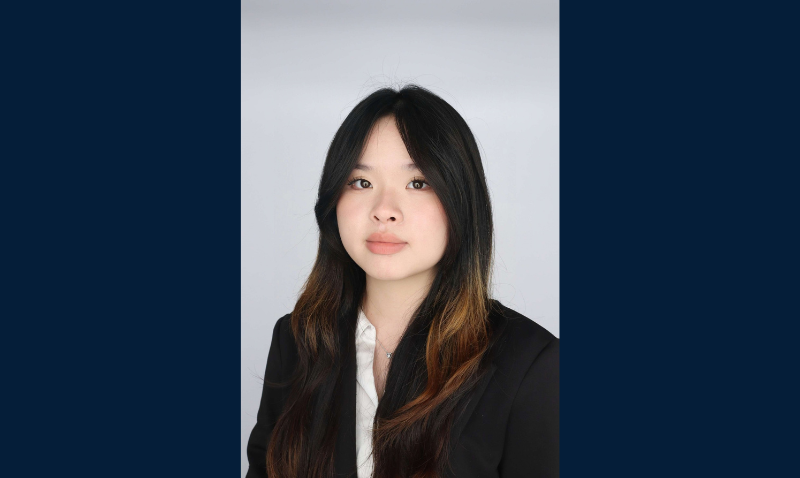
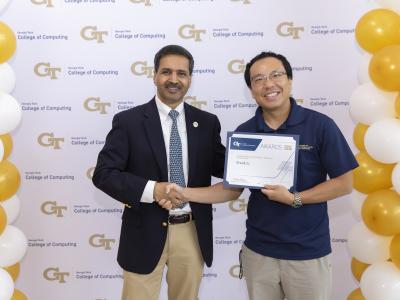
Yibin Yang (Ph.D. CS 2025) was awarded a 2025 Dissertation Award for his thesis on zero-knowledge proofs in real-world problems. SCP Professor and Senior Associate Chair Vlad Kolesnikov advised Yang and acknowledged that Yang’s work advances the field of cryptography.
Yang contributed to the advancement of zero-knowledge proofs and multi-party computations, while also building toolchains that are faster and more usable than existing systems. His work earned a distinguished paper award at the 2023 ACM CCS, and he also served as an RSAC Security Scholar.
Staff Lead the Way
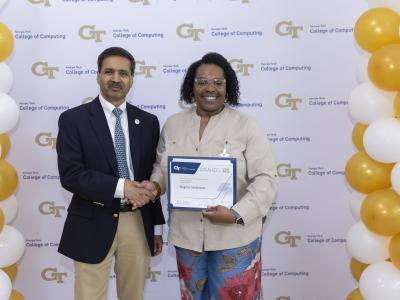
In the staff category, Mary Helen Hayes was awarded the Outstanding Staff Leadership Award, and Gina Anderson received the Ruthie Book Outstanding Staff Team Member Award.
The Outstanding Staff Leadership Award is given to a full-time administrative staff member in recognition of an outstanding record of leadership that has resulted in a significant positive impact on the College of Computing, the Institute, or the computing community. Hayes was nominated by four faculty and staff members for this award for her steady presence in SCP since she began her role as director of research operations in 2024.
The Ruthie Book Outstanding Staff Team Member Award is presented to a staff member in recognition of their outstanding performance in honor of Ruthie Book, who exemplified excellence in her work. Anderson was nominated by SCP faculty and staff for her outstanding leadership and mentorship as assistant director of business operations.
Both received praise for their hard work from the college as well as from their supervisor, Senior Academic Officer Jan Morian.
“I am so incredibly proud of our staff in the School of Cybersecurity and Privacy who won awards this year at the College of Computing Annual Awards ceremony,” she said.
“Mary Helen Hayes and Regina Anderson are truly outstanding staff members who exemplify Georgia Tech’s values. Their leadership has contributed substantially to the success of the school.”
Cybersecurity Faculty Net Four Awards
The College of Computing also recognized four SCP faculty members for excellence in teaching and research during the college’s annual award ceremony.
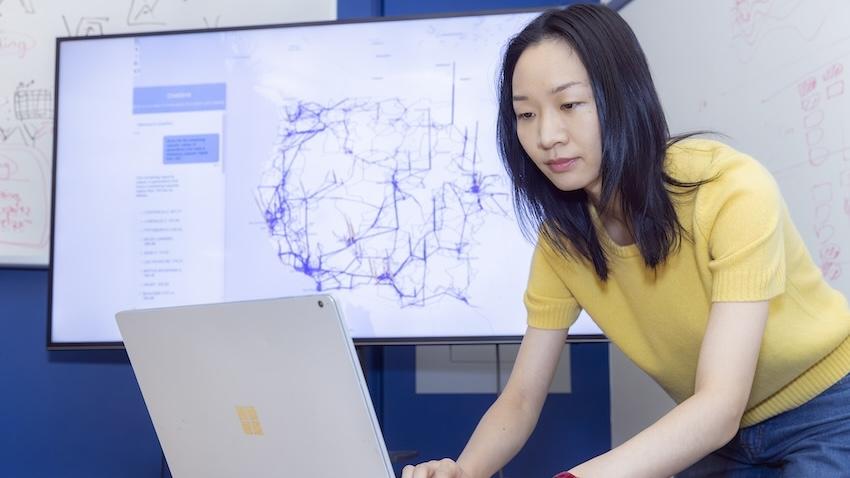
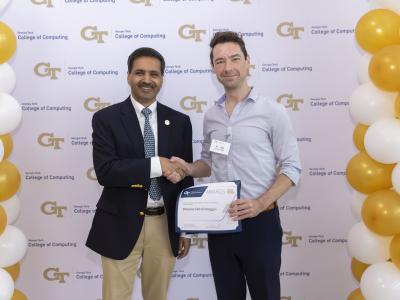
Assistant Professor Teodora Baluta received the Junior Faculty Teaching Award for developing a new graduate-level course that brought together generative artificial intelligence (AI) security, adversarial machine learning, cryptography, and differential privacy. Her nominator, SCP Associate Professor Vassilis Zikas, said the course bridged a critical gap in a rapidly evolving area of computing.
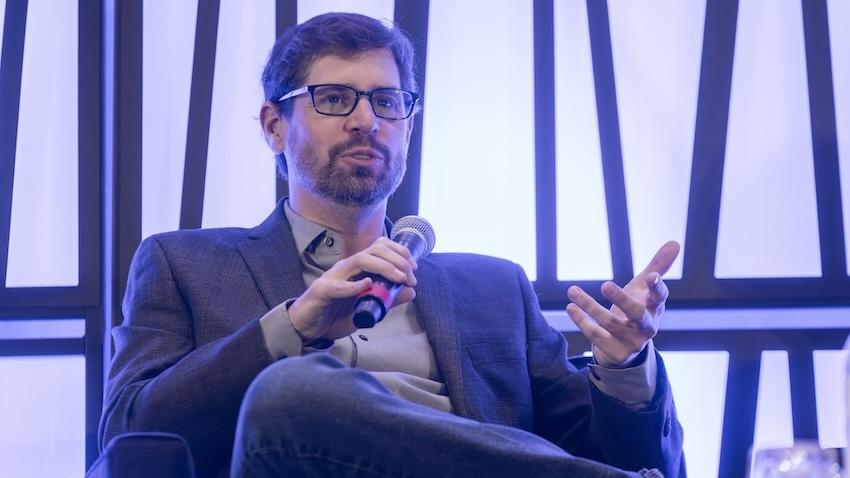
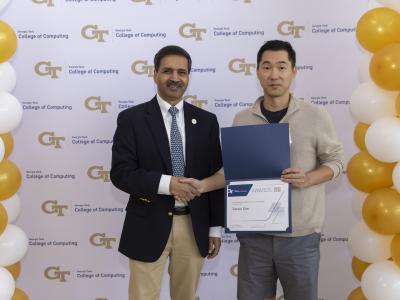
For his role in leading Team Atlanta to victory in the DARPA AI Cyber Challenge, Professor Taesoo Kim received the Outstanding Senior Faculty Research Award. His nominator, Regents Professor Wenke Lee, praised the team’s performance, which not only won the competition but also beat the combined score of all other competitors. The AI developed by Team Atlanta is now open sourced with the Open Source Security Foundation.
Associate Professor Frank Li received the Junior Faculty Research Award for establishing world-class research BEES Lab at Georgia Tech. One of his nominators, Associate Professor Saman Zonouz, put Li’s name forward for his work empirically evaluating and improving internet security and privacy from an operational standpoint.
Finally, Associate Professor Brendan Saltaformaggio received the Mid-Career Faculty Research Award. Zikas nominated him for establishing internationally recognized research in cybersecurity forensics, malware analysis, AI security, and software supply chain security. Saltaformaggio’s research highlights include the discovery of over $2 billion in stolen funds on the Ethereum blockchain.
"We know SCP faculty conduct highly impactful research that is of the highest quality,” said SCP Interim Chair Mustaque Ahamad. “Our faculty receiving research awards at all levels recognizes this and shows how we are working to realize SCP’s vision of creating security for everyone and everything."