New Faculty Member Examines How AI Shapes Our Most Personal Relationships
From workplace interactions to romantic relationships, artificial intelligence (AI) is increasingly part of many personal aspects of people's lives.
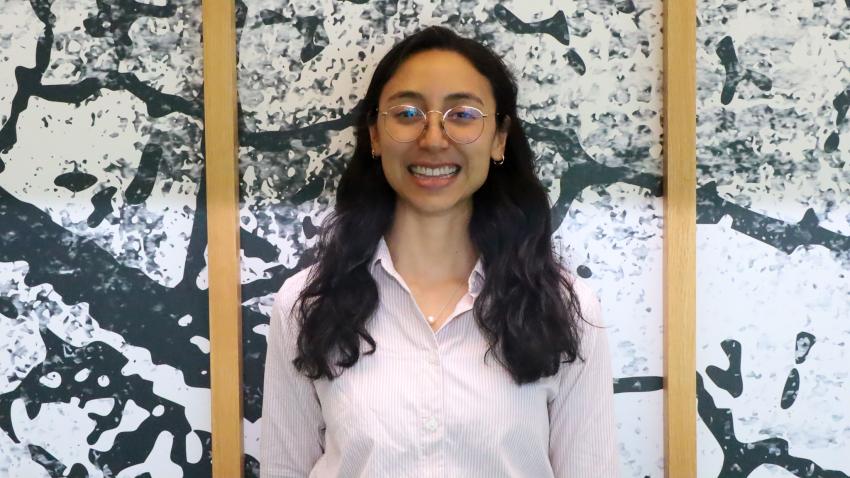
For Georgia Tech Assistant Professor Veronica Rivera, the growing role of AI in daily life raises important questions about what happens when technology designed to help people puts their privacy and safety at risk.
Rivera studied AI at the University of California, Santa Cruz, but her research has increasingly focused on how people interact with technology and the risks that can emerge from these interactions. Her work examines technology-facilitated risks and abuse. She uses research and innovative design approaches to understand digital safety risks and develop tools that better protect people.
One area she is exploring through her recent Computing Research Association Trustworthy AI Research Fellowship for Early Career Scholars is the design of safe AI tools for labor unions.
“Unions are developing AI tools to sort through complaints,” she said. “Many of these are built with proprietary AI models, which leads us to ask what the risks are of sharing personal information through these tools.”
Rivera wants to give unions more control over how workers’ data is collected and used. One way she plans to explore this is through a workshop at the upcoming ACM Conference on Human Factors in Computing Systems, where union leaders and technical experts collaborate to develop a secure reporting tool.
This research will build on Rivera’s recent work focusing on platform-based gig workers. A paper she published this year at the Symposium on Usable Privacy and Security examined how freelance workers often use secretive "digital whisper networks," informal online communities where people warn one another about workplace abuse.
Rivera and her team found that these workers often avoided formal reporting channels when they experienced wage theft, discrimination, health and safety violations, or sexual misconduct. The study highlighted the need for secure channels that allow workers to report abuse and organize without further endangering themselves.
“There needs to be a way to report this abuse,” Rivera said. “But how you do that in a safe and secure way is something we don’t yet have answers for.”
Rivera is also expanding her research beyond the workplace to examine technology-based threats and abuse in romantic relationships. As a new assistant professor at Georgia Tech’s School of Cybersecurity and Privacy, she plans to study how AI can blur the line between technology and intimacy.
Consider a person who creates an AI chatbot that imitates someone they know, turning that person’s likeness, personality, or private information into a virtual romantic partner without their consent. If that happens, Rivera asks, what protections does the person have? How can the chatbot be reported and removed?
Existing policies and reporting systems may not adequately address situations like these. In fact, they can pose new challenges for people whose identities or personal information are used without their permission.
Another project Rivera would like to explore is how platforms handle abuse involving romantic chatbots. Rivera has reviewed Reddit discussions in which users expressed concerns about reporting abusive behavior and about what happens to the intimate information they share with their chatbots.
“There is a lot of confusion on what these platforms know about their users’ intimate details based on their chats,” she said. “There is also a lot that isn’t known on the back-end of abuse reporting.”
Rivera has identified a need to design safer reporting features so people feel comfortable reporting abuse while also knowing their personal information will remain private.
She plans to cover these topics and more this fall in her new course that explores sociotechnical security. Rivera says working within SCP’s interdisciplinary structure gives her the opportunity to explore these research problems from multiple angles.
“It is hard to find a place for the work I do in security and privacy,” Rivera said. “Our goal is to protect users from bad things, and SCP approaches it from several different angles.”
For Rivera, this means studying not only how technology can be secured, but how it can be designed to protect the people who rely on it.