New Research Priorities Chart Course Toward Impactful, Energy-Efficient Computing
Georgia Tech researchers applied their expertise to a national research program that will shape the future of computing. Their work may yield more energy-efficient computers and better predictions for environmental challenges like carbon storage, tsunamis, wildfires, and sustainable energy.
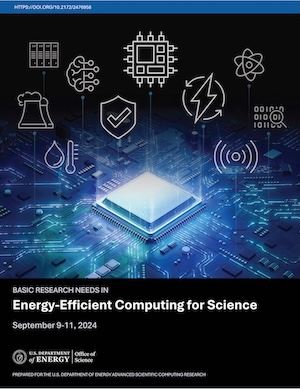
The Department of Energy Office of Science recently released two reports through its Advanced Scientific Computing Research (ASCR) program. The reports were produced by workshops that brought together researchers from universities, national labs, government, and industry to set priorities for scientific computing.
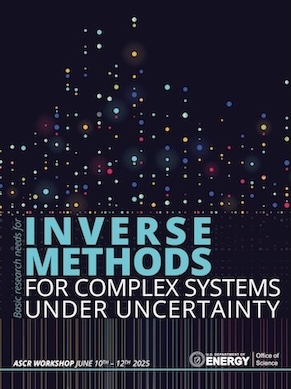
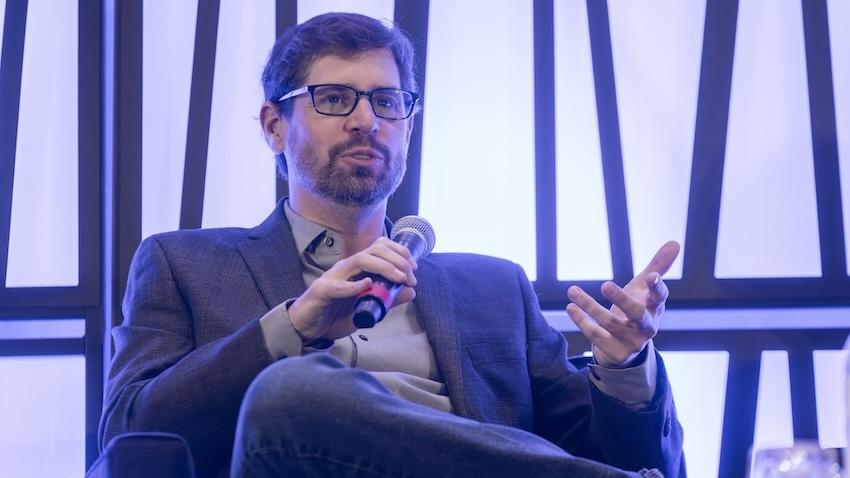
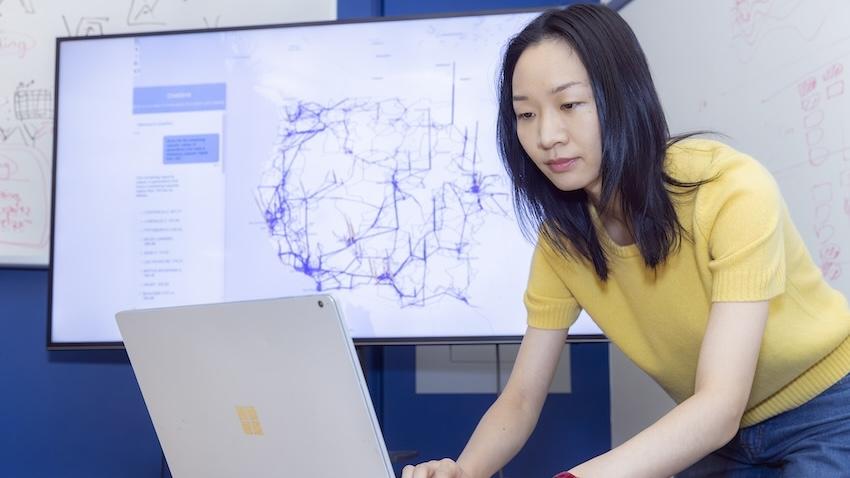
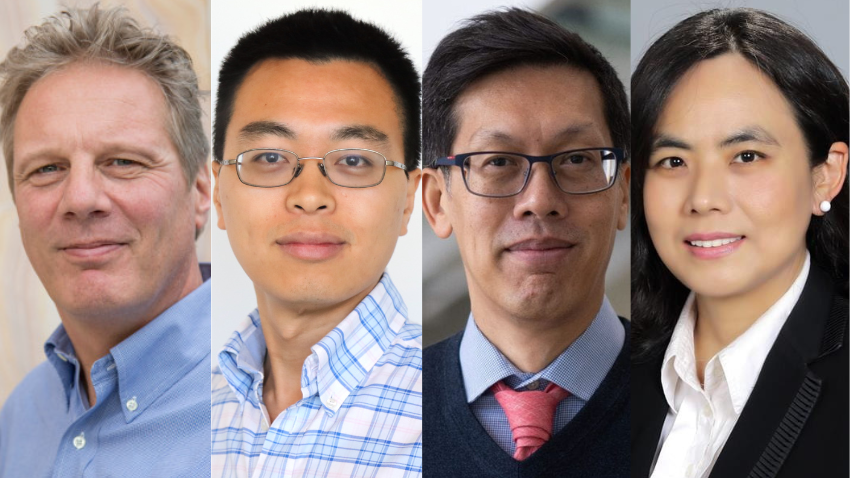
Professor Felix Herrmann served on the organizing committee for the Workshop on Inverse Methods for Complex Systems under Uncertainty. Assistant Professor Peng Chen joined Herrmann as a workshop participant, contributing expertise in data science and machine learning.
Inverse methods work backward from outcomes to find their causes. Scientists use these tools to study complex systems, like designing new materials with targeted properties and using past wildfires to map vulnerable areas and behavior of future fires.
The ASCR report highlighted Herrmann’s work on seismic exploration and monitoring through digital twins. Founded on inverse methods, digital twins upgrade from static models to virtual systems that accurately mirror their physical counterparts.
Digital twins integrate real-time data sources, including fluid flows, monitoring and control systems, risk assessments, and human decisions. These models also account for uncertainty and address data gaps or limitations.
The DOE organized the workshop to support the growing role of inverse modeling. The group identified four priority research directions (PRDs) to guide future work. The PRDs are:
- PRD 1: Discovering, exploiting, and preserving structure
- PRD 2: Identifying and overcoming model limitations
- PRD 3: Integrating disparate multimodal and/or dynamic data
- PRD 4: Solving goal-oriented inverse problems for downstream tasks
“A digital twin is a system you can control, like to optimize operations or to minimize risk,” said Herrmann, who holds joint appointments in the Schools of Earth and Atmospheric Sciences, Electrical and Computer Engineering, and Computational Science and Engineering.
“Digital twins give you a principled way to consider uncertainties, which there are a lot in subsurface monitoring. If you inject carbon dioxide too fast, you will will increase the pressure and may fracture the rock. If you inject too slow, then the process may become too costly. Digital twins help us make balanced decisions under uncertainty.”
Supercomputers, algorithms, and artificial intelligence now power modern science. However, these tools consume enormous amounts of energy. This raises concerns about how to sustain computing and scientific research as we know them in the decades ahead.
Professors Rich Vuduc and Hyesoon Kim co-authored the report from the Workshop on Energy-Efficient Computing for Science. At the three-day ASCR workshop, participants identified five key research directions:
- PRD 1: Co-design energy-efficient hardware devices and architectures for important workloads
- PRD 2: Define the algorithmic foundations of energy-efficient scientific computing
- PRD 3: Reconceptualize software ecosystems for energy efficiency
- PRD 4: Enable energy-efficient data management for data centers, instruments, and users
- PRD 5: Develop integrated, scalable energy measurement and modeling capabilities for next-generation computing systems
“I’m cautiously optimistic about the future of energy-efficient computing. The ASCR report says, from a technological point of view, there are things we can do,” said Vuduc.
“The report lays out paths for how we might design better apps, hardware systems, and algorithms that will use less energy. This is recognition that we should think about how architectures and software work together to drive down energy usage for systems.”