Researchers Look to Bolster Technology Support for Menopause
Women in need of supportive maternal and menstrual healthcare in patriarchal societies have increasingly found outlets for disclosure in online communities.
That support, however, begins to disappear in these restrictive cultures once women reach menopause, according to new research from Georgia Tech
Naveena Karusala, an assistant professor in Georgia Tech’s School of Interactive Computing, and master’s student Umme Ammara are working toward improving existing technologies and designing new ones for a demographic they believe has been neglected.
Karusala and Ammara co-authored a paper based on a study they conducted with women in urban Pakistan experiencing menopause.
“Women’s health is understudied in general, but menopause is more neglected than other women’s health issues,” Karusala said. “Our choice to focus on menopause is motivated by expanding how we holistically think about women’s well-being across their lifespan.”
Karusala and Ammara will present their paper in April at the 2026 ACM Conference on Human Factors in Computing Systems (CHI) in Barcelona.
Masking Symptoms
Menopause is diagnosed after 12 consecutive months without a period, vaginal bleeding, or spotting. The transition to menopause, called perimenopause, usually happens over two to eight years.
Hormone changes may cause symptoms such as irregular periods, vaginal dryness, hot flashes, night sweats, trouble sleeping, mood swings, and brain fog.
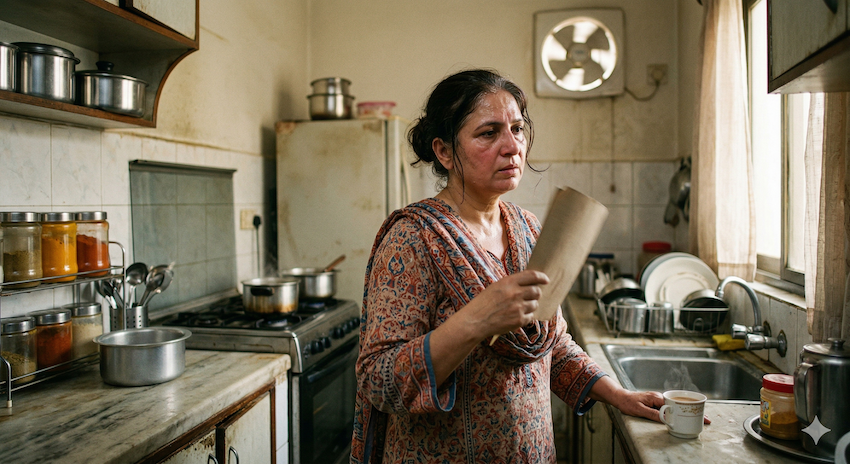
These symptoms can be debilitating in some cases and affect daily life. However, Ammara said women are pressured to remain silent, maintain appearances, and regulate their emotions to meet social expectations.
“Understanding menopause is important because a woman would be experiencing all these symptoms, and people will not understand those as actual symptoms,” Ammara said. “There’s been resistance to the idea of the medicalization of menopause. People don’t view it as an illness, but as a life transition and something that happens naturally.”
Feeling Isolated
The women interviewed by Karusala and Ammara either stayed at home full-time or were part of the workforce.
The researchers discovered that trusted family members might be the only sources women who stay at home and do not work turn to for disclosure.
“Women at home have the flexibility to take breaks or work at their own pace, so a lot of their experience is shaped by the emotional barriers they face,” Ammara said.
“That could come from their husbands and family members. Some are supportive and some are not. They might weaponize it and use that term against them, or they might dismiss what they’re going through.”
Ammara said it might be easier for women in the workforce to confide in their coworkers, but explaining to an employer that they need sick leave for menopause symptoms can be intimidating.
Even in online communities that have enabled women to anonymously share their health experiences, menopause is seldom discussed.
Raising Awareness
Karusala and Ammara argue in their paper that a public health approach could be the most effective way to spark conversation about menopause in a patriarchal culture in which technology use varies.
They said the challenge in implementing technologies geared toward menopause support is that the condition isn’t well understood in public. Improving maternal health, for example, is easier to promote within these societies because of the general understanding that motherhood is important.
“There must be an existing infrastructure to build on,” Karusala said. “For example, menstrual and maternal health are taught in schools and regularly discussed in primary care. Cultural and social meaning and importance are placed on motherhood.
“A lot of that doesn’t exist for menopause. Primary care doctors are unprepared to talk about menopause compared to other health issues.”
Design Solutions
Ammara said that the most effective way for technologies to make an impact on women going through menopause is to directly address systemic power structures around women’s health within Pakistani culture.
It can start with the husbands.
“Framing the issue for husbands to understand menopause should be at the forefront of designing technology solutions,” she said.
“In Islamic contexts, we suggest using faith-based framings. This has been proposed for maternal health in prior works that draw on Islamic principles to engage expectant fathers in providing care and support. Framing it around religious responsibility to involve men in the journey can also be done for menopause.”
Learn more about GT@CHI 2026 for new research in human-computer interaction.