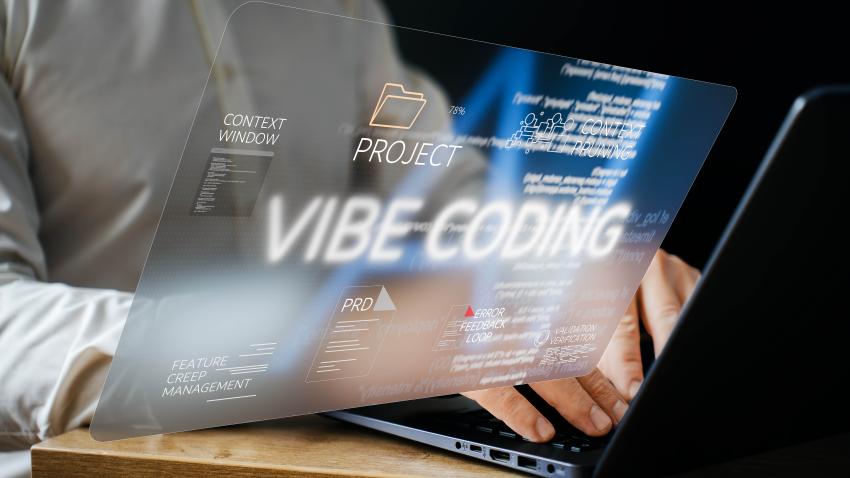
Bad Vibes: AI-Generated Code is Vulnerable, Researchers Warn
Vibe coding programmers are releasing batches of vulnerable code, according to researchers at the School of Cybersecurity and Privacy (SCP) at Georgia Tech, who have scanned over 43,000 security advisories across the web.
The programming style relies on using generative artificial intelligence (AI) to create software code using tools like Claude, Gemini, and GitHub Copilot. According to graduate research assistant Hanqing Zhao of the Systems Software & Security Lab (SSLab), no one had been tracking these common vulnerabilities and exposures before the launch of their Vibe Security Radar.
“The vulnerabilities we found lead to breaches,” he said. “Everyone is using these tools now. We need a feedback loop to identify which tools, which patterns, and which workflows create the most risk.”
The radar extensively scans public vulnerability databases, finds the error for each vulnerability, and then examines the code’s history to find who introduced the bug. If they discover an AI tool's signature, the radar flags it.
Of the 74 confirmed cases uncovered so far by the tool, 14 are critical risks, and 25 are high. These vulnerabilities include command injection, authentication bypass, and server-side request forgery. Zhao explained that since AI models tend to repeat the same mistakes, an attacker would need to find these bugs just once.
“Millions of developers using the same models means the same bugs showing up across different projects,” he said. “Find one pattern in one AI codebase, you can scan for it across thousands of repositories.”
Despite its success, the team has only scratched the surface of the problem. The radar can trace metadata like co-author tags, bot emails, and other known tool signatures, but it can't identify an issue if these markers have been removed.
The next step is behavioral detection. AI-written code has patterns in how it names variables, structures functions, and handles errors.
“We're building models that can identify AI code from the code itself, no metadata needed,” said Zhao. “That opens up a lot of cases we currently can't touch.”
The team is also improving its verification pipeline and expanding its sources to include more vulnerability databases. The goal is to get a more complete picture of AI-introduced vulnerabilities across open source, not just the ones that happen to leave signatures behind.
As more programmers rely on vibe coding, Zhao warns that it still needs to be reviewed as thoroughly as any other project.
“The whole point of vibe coding is not reading it afterward, I know,” he said. “But if you're shipping AI output to production, review it the way you'd review a junior developer's pull request. Especially anything around input handling and authentication.”
When prompting AI, SSLab also recommends providing more detailed instructions to get it closer to production-ready. There are also tools to check the code for vulnerabilities after code it has been generated. Not double-checking could lead to a catastrophe.
“The attack surface keeps growing,” said Zhao. “More people running AI agents locally means the attacker doesn't need to break into the company infrastructure. They just need one vulnerability in a model context protocol server that someone installed and never reviewed.”
One reason the attack surfaces are expanding rapidly is AI’s evolution. In the second half of 2025, the Vibe Security Radar found about 18 cases across seven months. Then, in the first three months of 2026, it identified 56. March 2026 alone had 35, more than all of 2025 combined.
Many tools, like Claude, are now more autonomous, allowing developers to write entire features, create files, and even make architecture decisions.
“When an agent builds something without authentication, that's not a typo,” said Zhao. “It's a design flaw baked in from the start. Claude Code and Copilot together account for most of what we detect, but that's partly because they leave the clearest signatures.”